
(click on pics to enlarge)
“Daube is a classic Provençal stew made with inexpensive beef braised in wine, vegetables, garlic, and herbes de Provence, and traditionally cooked in a daubière, a braising pan” – [Wikipedia]. Daube is pronounced “dobe”, like robe.
I love these French names for dishes. It makes me sound so cultured when talking about a pot roast. When I think daubière, I think crock-pot! Make your choice. Would you prefer to say you’re making a “Daube de Boeuf Provençal slow cooked in a daubière,” or would you prefer to say you’re making a “Beef Stew slowly cooked in a crock-pot?” It’s the same thing.
~~~
Researching this dish as I do all dishes, I find the same thing I do of all dishes. There are so many variations! I ask, what makes this dish any different than Beef Bourguignon? There are differences.
Boeuf Bourguignon is a dish from the Burgundy region in eastern France and the dish calls for Burgundy wine.
Boeuf Provençal is from the Provence region in southern France and Côtes-du-Rhône wine from the Rhône Valley is used.
Boeuf Bourguignon is beef, beef broth, wine, garlic, onions, bouquet garni, pearl onions and mushrooms.
Boeuf Provençal is beef, wine, vegetables, garlic and herbes de Provence. I can tell you the herbes de Provence makes an immediate difference.
Both are larded with lardons (non-smoked bacon).
This is where the technique of braising comes in and adds even more difference.
In Boeuf Bourguignon (Beef Burgundy) the meat is browned in a Dutch oven, rolled in flour, placed in a 425⁰ oven for 10 minutes to bind the flour, then the fond (the brown stuff on the sides of the Dutch oven) is deglazed from the walls of the Dutch oven, then all the ingredients are added back to the Dutch oven and cooked several hours at a low temperature. (I have made this many times – the Julia Child version. It is a lot of work. Your elbows are moving at all times.)
In Daube de Boeuf Provençal (Beef Stew of Provence) the beef is browned and then the ingredients are placed in a daubière (a ceramic braising pot) and cooked in stages. The first day the meat and vegetables are marinated in wine overnight, the second day the pot is slow cooked for a very long time, then cooled and on the third day it is reheated and served. This is done to meld the flavors. This dish has a far lighter flavor than Boeuf Bourguignon, better for the summer.
As it turns out, for me Daube de Boeuf Provençal is the easier of the two dishes to make b/c I have a crock-pot and a propane BBQ pit.
There are two more versions of Daube. New Orleans, my home town and a one hour drive from where I live, is home to the Creole Daube and a Daube glacé. The Creole Daube adds green peppers, creole hot seasoning and tomato sauce. The glacé I have no idea how to make and it looks a little weird to me. I’m not “into” jello and meat.
The Daube I make does call for tomatoes. I use Roma (plum) tomatoes skinned and diced. I will also use orange peel. I will add mushrooms. Some people add olives but I don’t think this dish needs it. I use a subtle Chianti wine. I have Côtes-du-Rhône here but the label I have is a little too fruity for my taste. I’m a “dyed in the wool” hearty Cabernet Sauvignon, oak-tannin, Napa Valley man. I’m not a fan of fruitier dry red wines. The idea for me is I want the wine not so fruity b/c everything else in the pot is natural. I want the meat and the vegetables to stand on their own with compliment. The Chianti is more fruity than Cabernet, but more dry than Côtes-du-Rhône. Chianti is actually a Sangiovese grape from the Chianti region of Italy and has a red cherry and spice flavor. But, whatever red wine you like, use it.
The other thing I use is herbes de Provence with lavender. Lavender is typically left out of the French version of herbes de Provence. Herbes de Provence is a mixture of savory, marjoram, rosemary, thyme, oregano and lavender in the American version.
How easy is this dish to make? Very!!!
Brown the meat on the BBQ (or in a pan). Chop the meat into big squares and place at the bottom of the crock-pot. Layer all the vegetables but mushrooms, add the herbs, then the wine, cover and leave in the frig overnight. Next day, place the crock-pot on low heat for 6 to 8 hours. Half way cooking adjust the seasoning and add the mushrooms. Let cool, place the pot back in frig. Next day spoon the dish into a Dutch oven and cook covered for an hour on a very low simmer and serve over mashed potatoes or egg noodles.
~~~
Top Round and bacon:

Day 1: Preparing the stoneware:
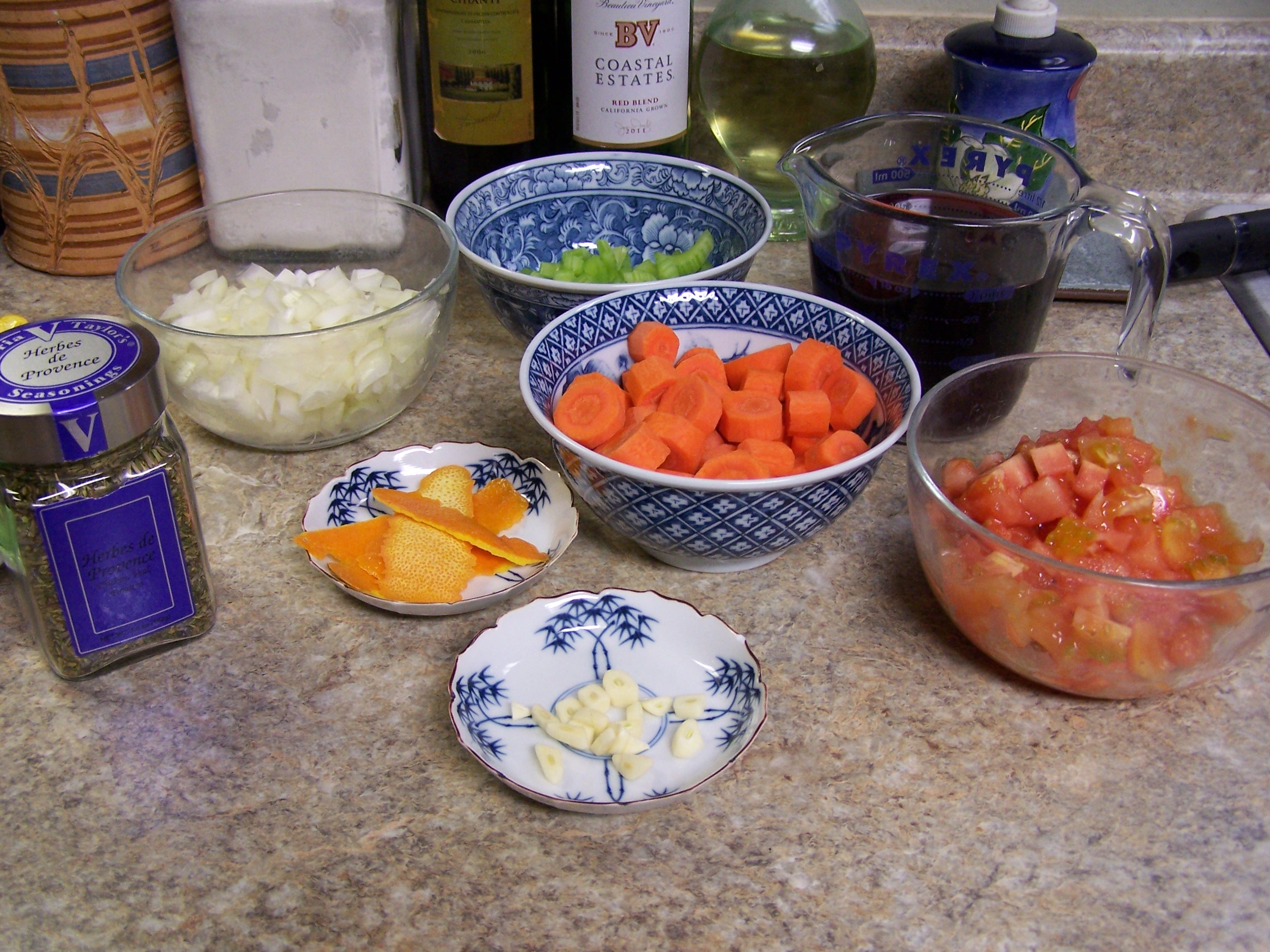
2 lbs. top round (or chuck, or bottom round)
2 strips bacon (If smoked, soak bacon in a pot of hot water for 20 minutes to neutralize the smoke flavor)
2 stalks celery peeled and chopped
4 medium carrots peeled and chopped
1 medium onion chopped
3 cloves garlic sliced
4 oz. whole white mushrooms (stemmed and cut into quarters)
4 strips of orange peel, (use a potato peeler)
4 Roma (plum) tomatoes peeled and chopped
1 tsp. herbes de Provence
2 cups red wine
Salt and pepper
1 Tbsp. corn starch (to thicken the gravy)

Brown the meat on the BBQ pit.
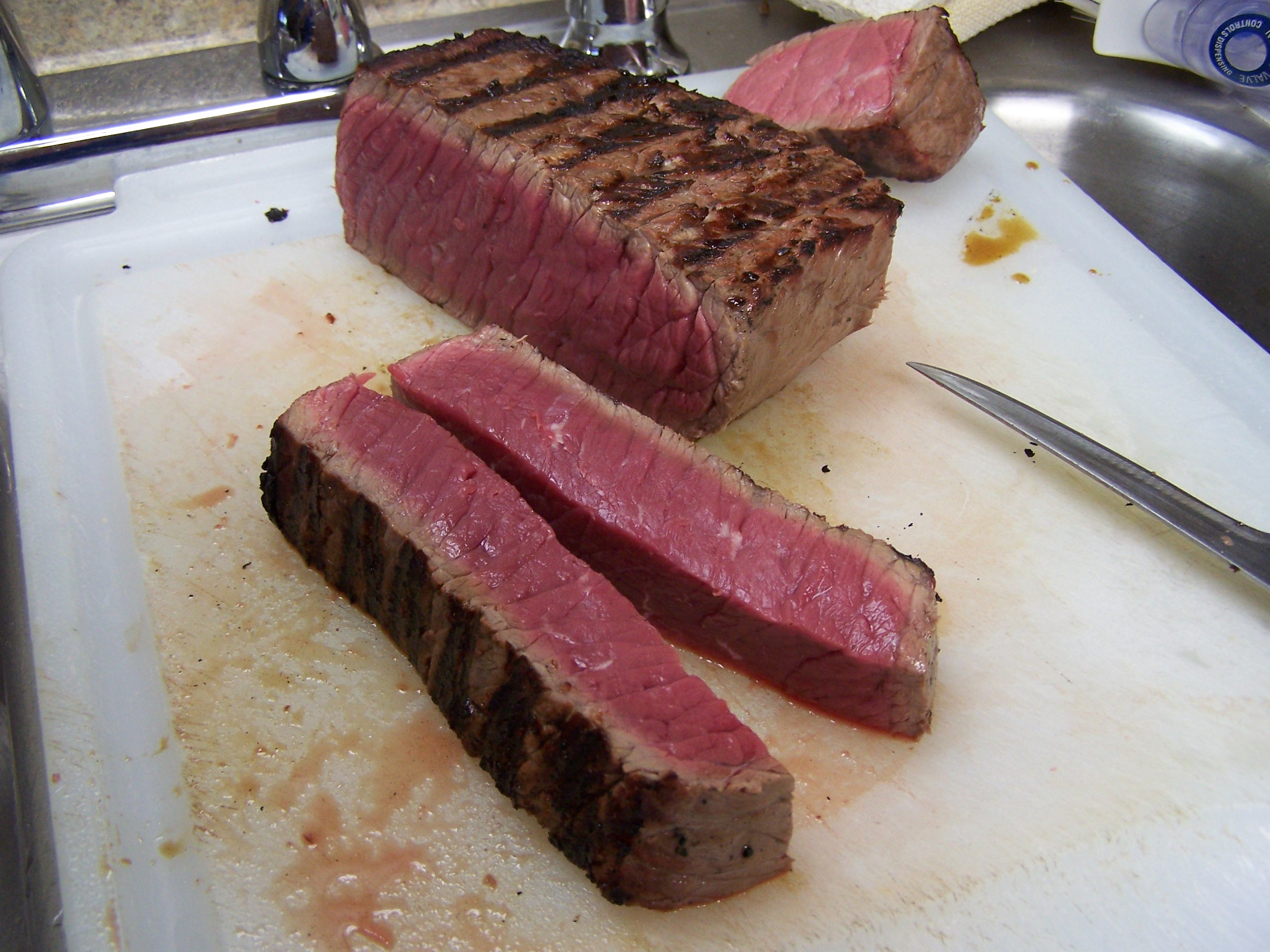
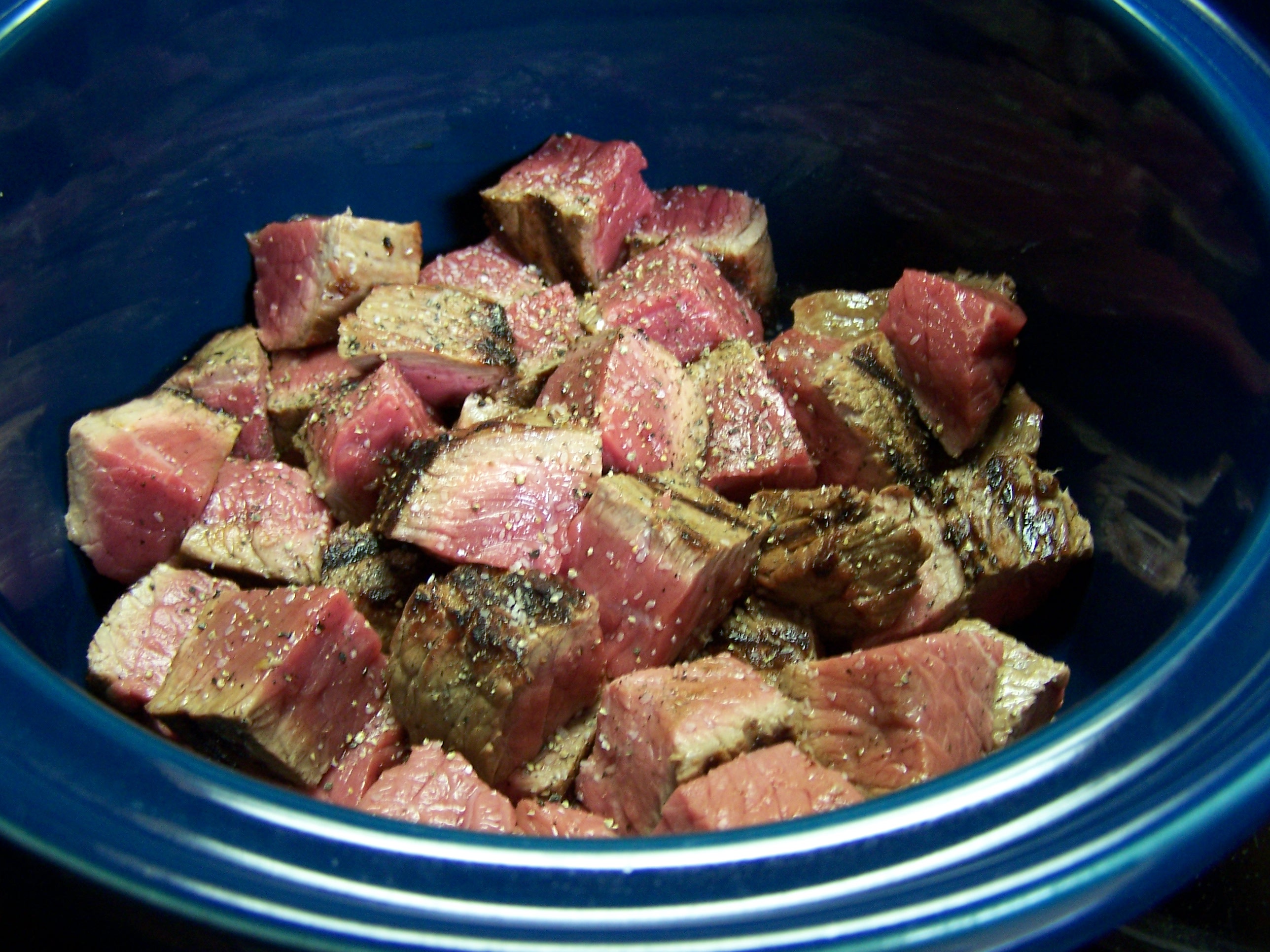
Chop into big squares and then season with salt and pepper. Place at the bottom of the pot.
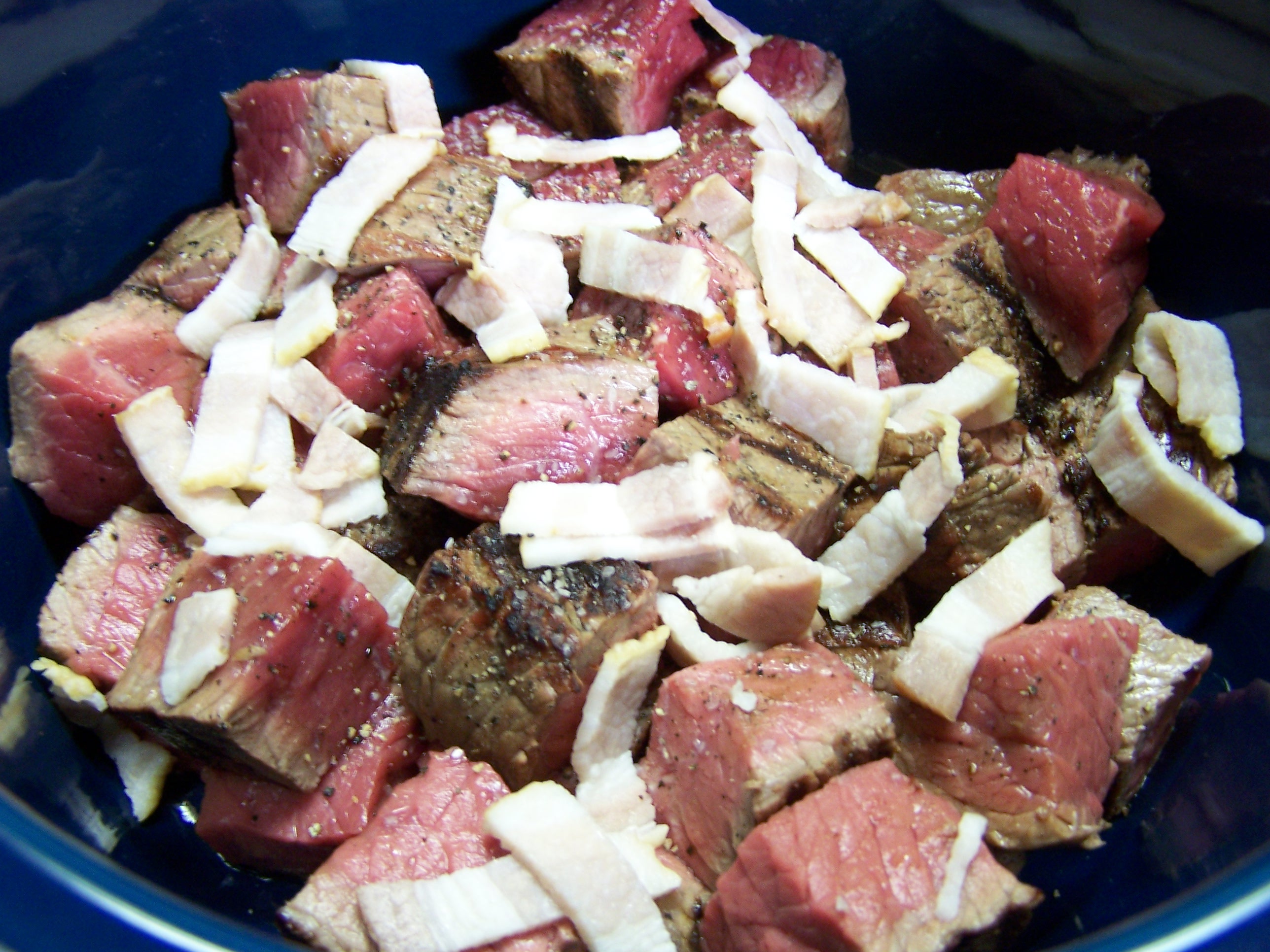
Boil water in a pot for 10 minutes then turn off heat. Place the bacon in the hot water for 20 minutes to remove most of the smoke flavor. Cut into strips. Place over the meat.
Add the garlic. Layer in the other vegetables.

Cut an X into the top and bottom of the tomatoes. Drop the tomatoes into two cups of boiling water no more than 1 minute. Immediately you will see the tomato skin start to separate. Remove quickly from the water with tongs rinse in cold water. Peel off the skin then chop the tomatoes and add to the pot.

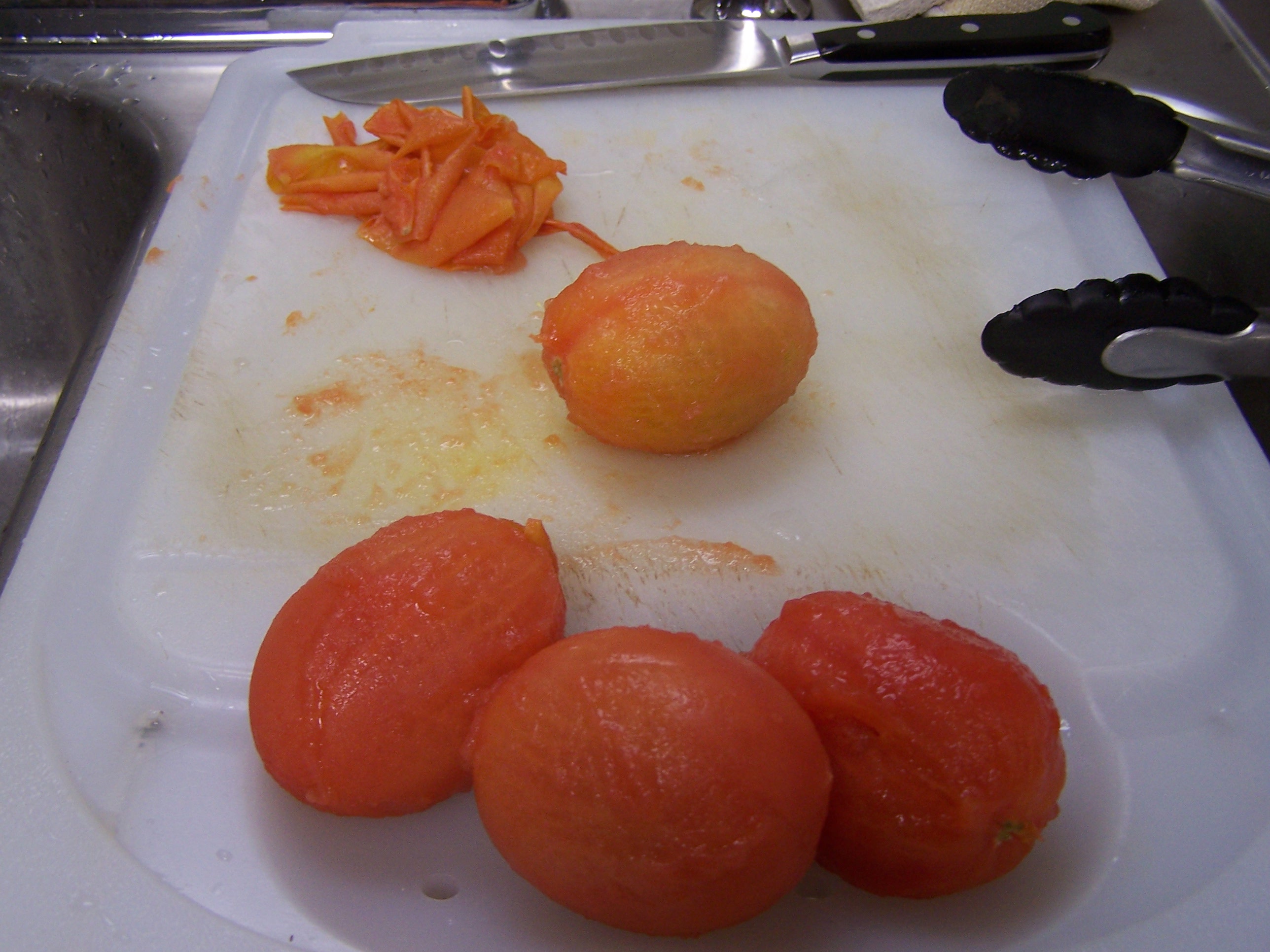

Add 1 tsp. herbes de Provence then pour in the wine. Cover the stoneware pot in plastic wrap and place in the refrigerator overnight. Do not stir the ingredients, leave as you layered them.

Day 2: The next morning place the stoneware pot onto its burner, cover and cook 6 to 8 hours on the low setting. Do not stir, leave as you layered the pot. Half way through add mushrooms and check the pot – remember do not stir. When done turn off pot and let cool. Cover in plastic wrap and put back in the refrigerator overnight.

Day 3: When ready to serve pour off all the liquids into a two cup bowl. Add one cup of the cold liquids to a sauce pan and then add one Tbsp. corn starch to the fluids and whisk. Heat the sauce pan and whisk until the corn starch begins to thicken. This will thicken the gravy. Add it to the Dutch oven. Add the rest of the liquids to the Dutch oven, spoon the solids into the Dutch oven, adjust the salt and pepper, stir, cover and cook 45 minutes on a very low simmer to heat the food nice and hot for serving.

Make mashed potatoes and spoon the dish over the potatoes. The meat is completely tender but the vegetables are still al dente. This dish is completely incredibly amazingly perfect.
Oh man don’t this good?

Can it be that easy?
Someone say yes.


 Ducks Mahal