English Bangers

(Click on pics to enlarge)

This is a Cumberland style banger owing to the mix of seasonings. 

Pork
I make 1 pound batches with pork shoulder with plenty of fat. I add ¼ lb. pork belly fat. Chop both the shoulder and and the belly in .5 inch pieces and mix together in the large bowl. Run through the meat grinder twice. Put back in the frig to cool.

Rusk (Bread Crumbs)
I make rusk from scratch with baking powder and no yeast.  Using rusk is the traditional way of making bangers.  However, ground up 10 saltine cracker work just as well. The extra salt from the crackers will not hurt. The purpose for the rusk is to bind the meat and fat and retain the juices in the sausage.

Rusk Recipe
135 gr. flour
80 ml. cold water
1.5 tsp. baking powder
dash of salt

Mix all in a bowl and form a dough ball. Roll out the dough to ¼ inch. In 450° oven bake 10 minutes. Slice the dough in ½ lengths, lower the over to 375° another 10 minutes. If they aren’t dry enough bake another 5 minutes on 275°. Run bread through a food processor grating blade and then the processor blade to make the rusk fine.

Sausage Casings
This is an important step. Use standard 29-32mm Hog Casings.  Open one end of the casing and in the sink fill it with water to rinse the inside and expand the casing. Then soak the casings in warm water and a TBSP of vinegar.  They should soak 30 minutes to an hour. 

Cumberland Style Seasoning
In a jar mix these seasonings.  Only use 3.5 to 4 teaspoons of seasoning per pound of pork and save the rest. You will want to mix the 3.5 to 4 teaspoons seasoning with water before adding it to the meat mixture:
3 tsp. sea salt
2 tsp. white pepper
3 tsp. dried sage
1 tsp. mace
1/2 tsp. nutmeg

Per Pound Ratios
36″ of casings per pound

To a KitchenAid mixer add the meat:
The rusk or 10 Saltine cracker chopped finely in a food processor
In a cup mix the seasoning and water together. (3.5 to 4 tsp of seasoning per pound to the meat and ½ cup or a little more of water per pound.) and add the seasoning mixture blend.

Mix one pound 3 minutes in a KitchenAid with a mixing blade until the meat gets like a wet Pâté. Place the meat in the frig until ready to stuff the casings. Always keep the meat as cold as possible throughout these steps.

Slide the casing onto the stuffing tube. When first starting run some meat the end of the stuffing to push out the air. Leave 6″ of casing on the end, don’t tie end until you are done stuffing the entire casing and working the meat evenly. This allows air to leave the casing.
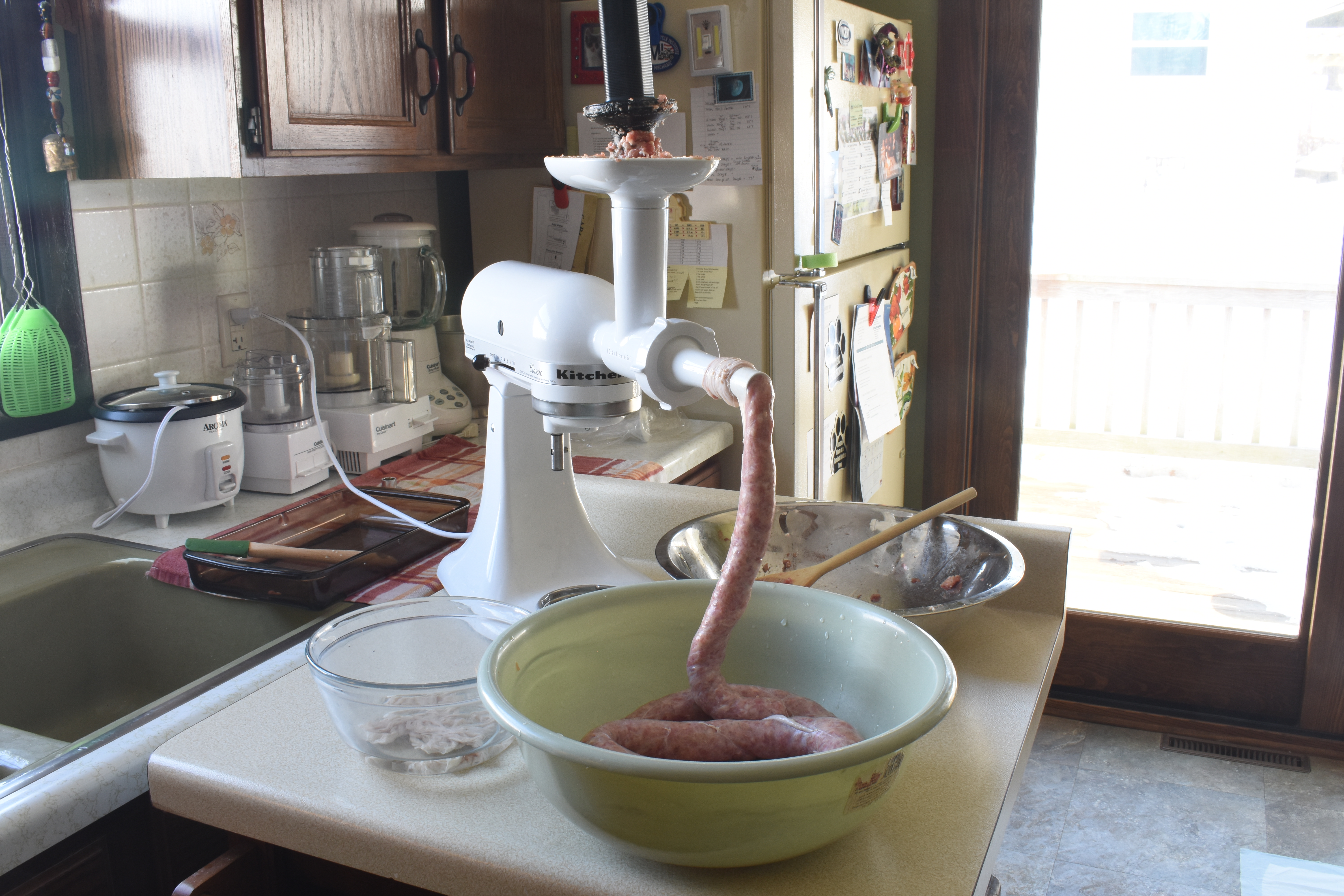
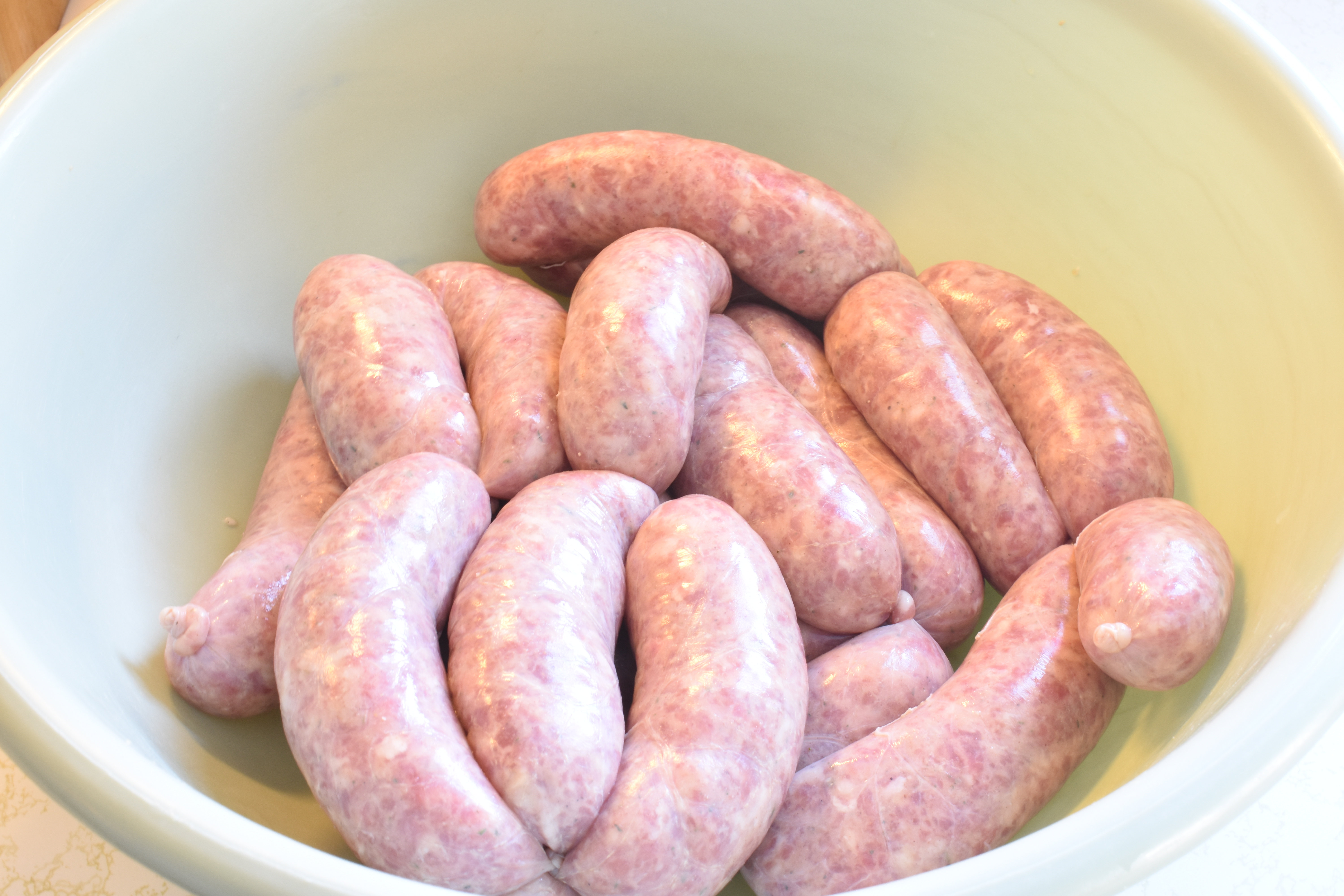
Stuff the casings and then twist the stuffed casings into sausage lengths ~4 inches.  Place them in the frig overnight. They need a baste in the seasonings overnight and maintain the form of the casing. Twist the casing away from you, then toward you and follow that process so the casings are nice and tight. Freeze what is left over in freezer bags.
Cooking Bangers

1) Place in a 360° for 30 minutes, then brown two sides lite brown in olive oil.
2) For bangers and mash, cook the same way and serve with mashed potatoes and gravy.

As of 2/2/25
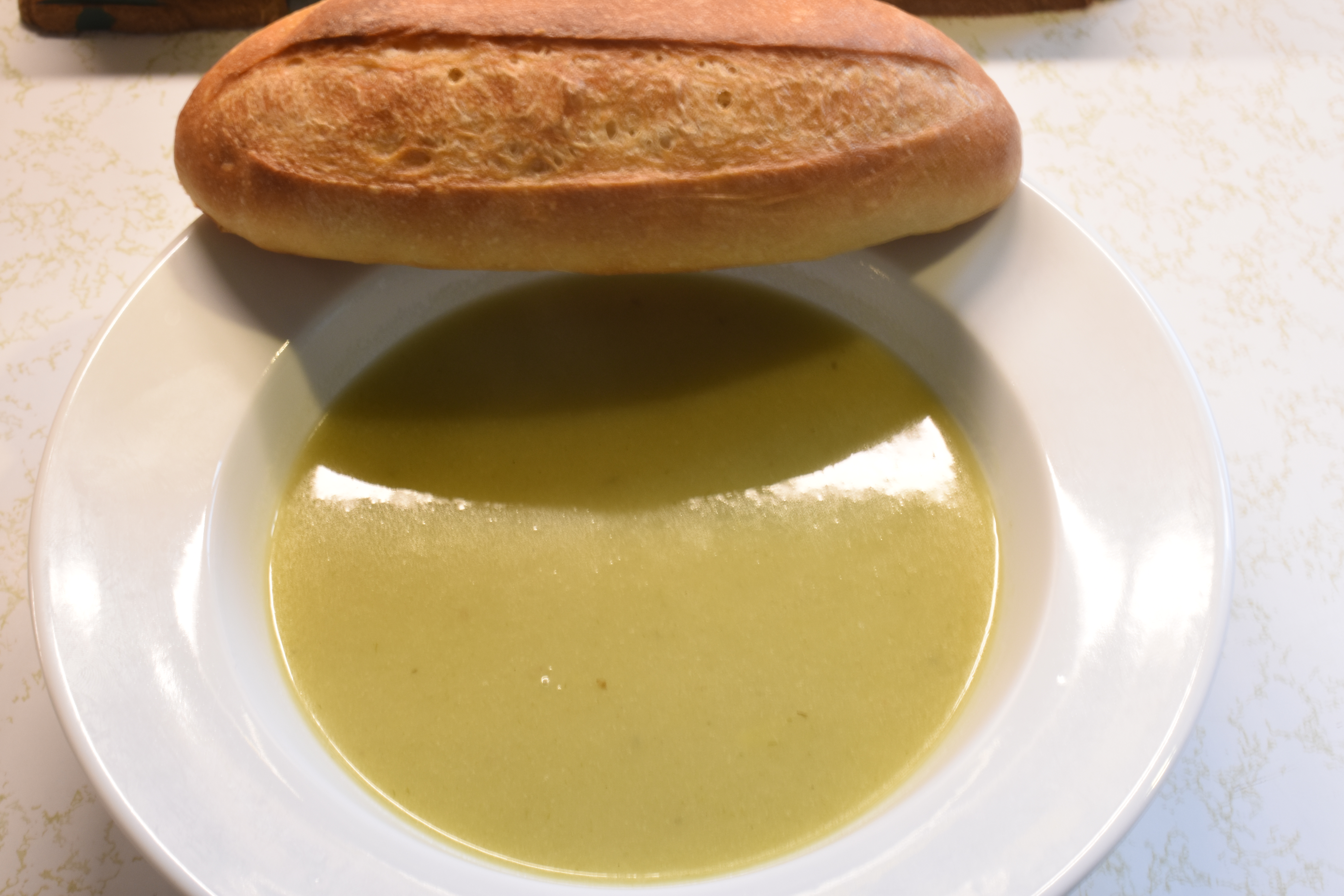
Leek and Potato Soup

(Click on pic to enlarge)

Serves 2

1 leek, keep some of the green leaves for color, slice long ways a couple of times and rinse the dirt from the inner parts of the leek and chop
1 ½ Lbs. Russet potatoes with skin on and coarsely chop
½ yellow onion chopped
3 to 4 cups chicken broth
Salt & White pepper
Dash of Tarragon
1 TBSP Olive oil
2 TBSP butter

Sauté the leeks, potatoes, and onion in olive oil 10 minutes on medium heat.

Add the chicken stock and reduce the liquid 20 minutes.

Ladle the soup into a food mill with a medium milling disk.  Mill the soup removing the stringy parts of the leek and return the milled soup to the soup pot.  Add the butter and with a hand blender blend the butter and the soup.  Return to the heat, add the Tarragon and heat until hot and serve. 

Serve with dinner rolls.

Vichyssoise: Serve this soup cold with a dash of cream. Vichyssoise is an American invention in America in 1917 and named after the French town of Vichy.

As of 9/29/21

Jambalaya

100_5421

(click on pics to enlarge)

No historically important cook blog – such as mine – in the entire world – and on some parts of the 837 planets outside our solar system can be without a Jambalaya recipe. There are many myths and legends as to the derivation of the name. As is the case with most things here, there is always a larger than life story about it. There are certain elements that can be assumed.

It started out Spanish near the Mediterranean where it was a rice dish using the ingredients of local seafood, meats and spices (saffron). Jambalaya can be considered the grandchild of what is commonly referred to as Valencian paella or a rice casserole made in a paella or a pan. The French word poêle means a frying pan or a stove. The Latin word patella is a pan as well. I know this because I looked it up on the Internet. I, for one, believe everything I read on the Internet.

So let’s break down Jambalaya and remove all the myths and legends behind the derivation of the name. Knowing what we know, and going with what we know, “Jamba” is a Haitian Creole word which means jamba. It is also a Croation word meaning jamba. Jamba is all over the place. It jambas around. “Laya” is a Spanish word meaning laya. It is also a French word meaning laya. So when we merge these two important multicultural meanings together what we get is, and you guessed it – Jambalaya. I looked it up! Don’t doubt me on this.  Actually it is rumored it is a derivative of the Spanish word “jamon” for ham.

There are two flavors of Jambalaya. One is with tomatoes, the other is without tomatoes. I make the one without tomatoes. Why? Pretty simple, really. Those people in New Orleans like to dump everything into a pot, add tomatoes, hot peppers, broth, grab a beer and call it a day. People like me who live near New Orleans in the rural regions, drink wine with our pinky-finger extended and cook this dish in stages because it is better that way. We brown the meat and cook the veggies gently. We don’t need hot peppers and tomatoes. Because, that’s the way we roll.

Down here, the one thing we all agree on when making Jambalaya is the rice, everything else is pretty much up for debate.

Simply, what you need to know is Jambalaya is a tasty meal, with or without tomatoes. And, if all we have to worry about is whether or not to use tomatoes in Jambalaya, we’re going to be just fine.

So, let us build a dish around 2 cups of rice. (Rule of thumb is one cup of rice to every pound of meat.)  This dish will serve 2 to 4.  I say 2 b/c we have some hearty eaters around here.  BTW, after I served this dish I had two more servings it was so good.  The third serving, a smaller serving, was pure binge tasting.

~~~

The first decision is the meat. I use 1 pound of pork shoulder picnic roast, 1 stick of andouille sausage, 2 strips applewood smoked bacon and ½ pound of shrimp. I have deer sausage in the freezer and since this is deer season here, there is plenty of it around, but I won’t use it in this recipe today. Andouille is the local sausage of choice originating in France but later perfected as it is today by German immigrants. There was a very large in-migration of Germans into Louisiana in 1722 in case you didn’t know that.

The next decision is the vegetables. In this one I will use onions, green onions (scallions), green bell pepper, orange bell pepper, garlic and celery. To me, orange bell pepper is sweeter than red.

The seasoning profile will be sea salt, ground pepper, paprika, bay leaf, Worcestershire and Tabasco pepper sauce.

100_5407

Meat
1 Lb. pork shoulder picnic roast
1 stick Andouille (cut in slices)
½ Lb. shrimp tails
2 strips of apple-wood smoked bacon (chopped)

Veggies
½ green bell pepper (chopped)
½ orange bell pepper (chopped)
1 stalk celery (chopped)
1 small onion (chopped)
1 clove garlic (chopped)
3 green onions (chopped)

Seasoning/Oil/Fluid
Sea Salt and ground pepper
1 tsp. paprika
1 bay leaf
1 dash Worcestershire
1 dash Tabasco pepper sauce
1 TBSP olive oil

2 cups chicken stock
1 cup shrimp stock (from the tails)
½ cup dry white wine

1½ cups long grain rice

Cooking:

100_5409

Chop the pork shoulder into small squares. Season with sea salt. Pour the olive oil in a Dutch oven and get the oil hot. Add the pork shoulder one hand full at a time and brown. The idea is to avoid putting too much of any ingredient in the pan and creating extra liquid. If there is too much liquid, the food won’t brown into what is referred to as a “fond” or a foundation. The meat and veggies will sweat. Not until we add the chicken stock will we begin to “deglaze” the fond.

100_5412

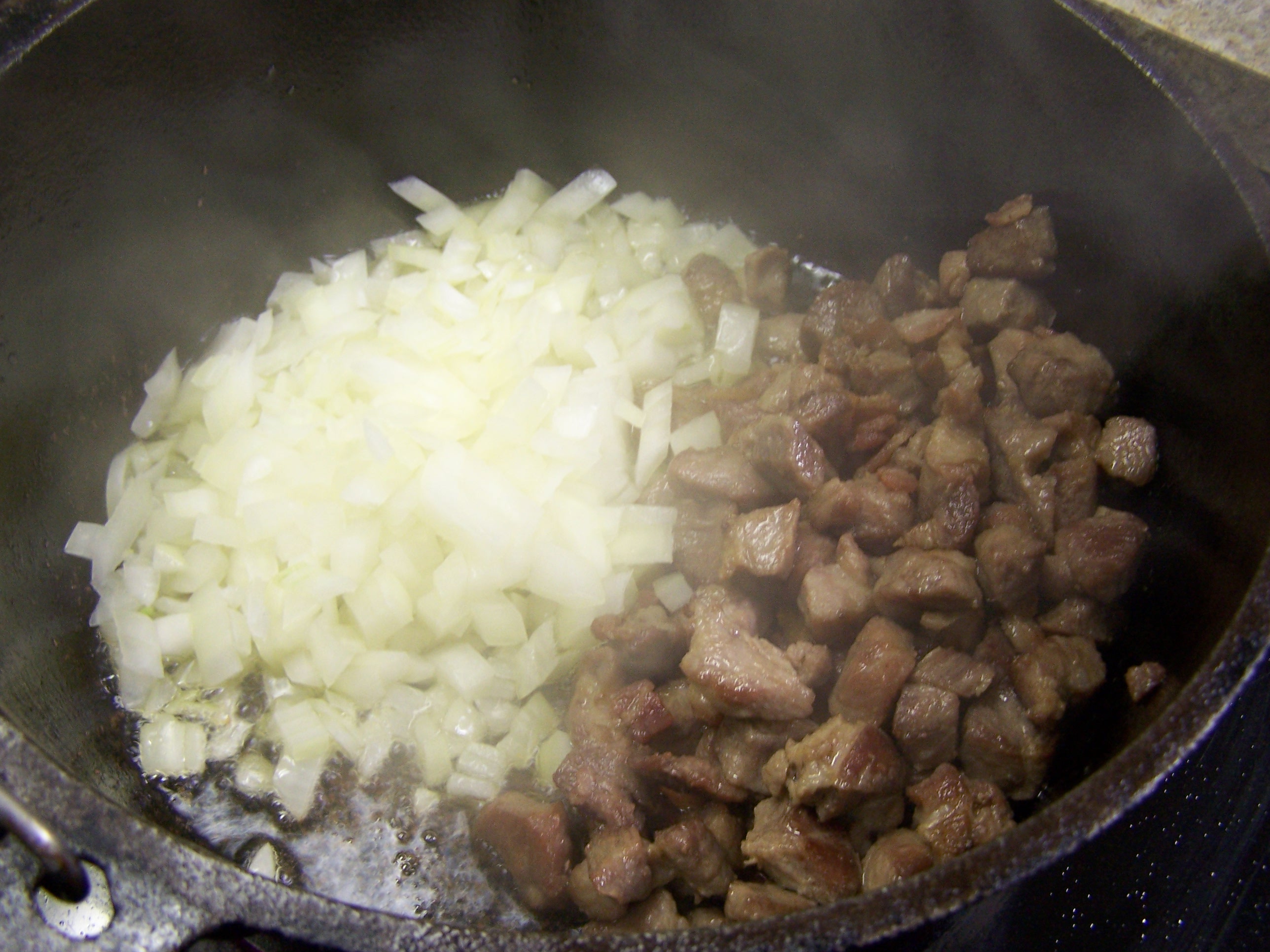
When the pork is browned add the bacon. Move the meat to one side of the pan and then add one handful of chopped onions and sauté.

100_5414

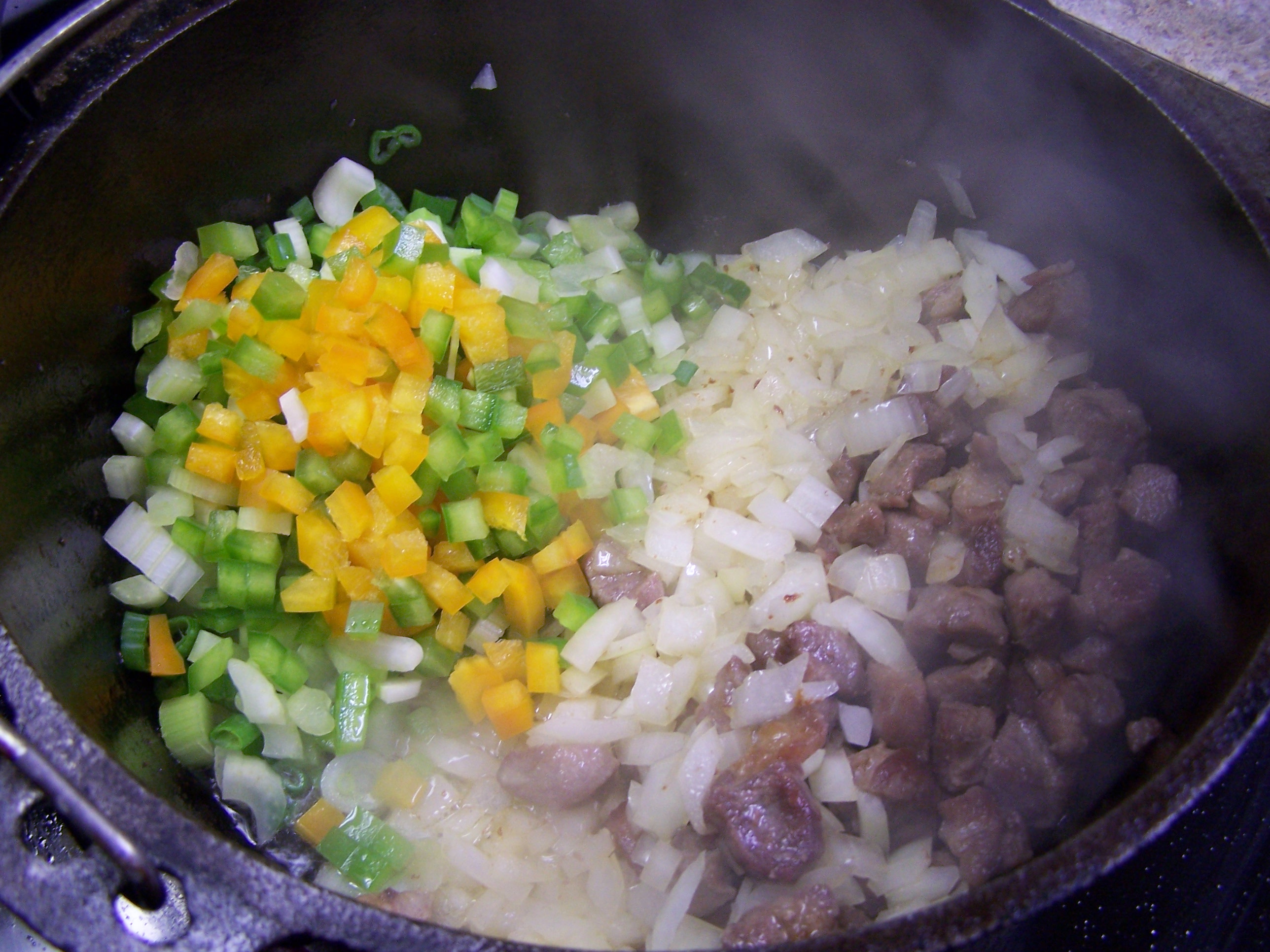
Move the onions to one side and add the rest of the veggies a handful at a time and sauté.

100_5415

Add the rice and stir for about 5 minutes so it can pick up the flavors in the pan .

Now add one cup of chicken stock and with a wooden spoon begin to deglaze the pan. I have a black cast iron pot so I try to make sure to scratch the bottom and hope I get most of it.

100_5416

Add the rest of the stock and the rest of the ingredients. Stir. Bring to a slight boil. Reduce heat to simmer. Cover. Cook 45 to 60 minutes. Let rest and serve.  Apply Tabasco on top of serving.

100_5419As of 9/26/21

Baked Cod with White Cheddar and Parmesan Cheese

2 cod fillets
½ cup mayo or Kewpie (Japanese mayonnaise)
2 green onions
¼ cup grated Parmesan cheese
¼ cup grated White Cheddar
1 teaspoon Worcestershire sauce

Mix mayo, green onion, Parmesan, cheddar cheese and Worcestershire sauce. 

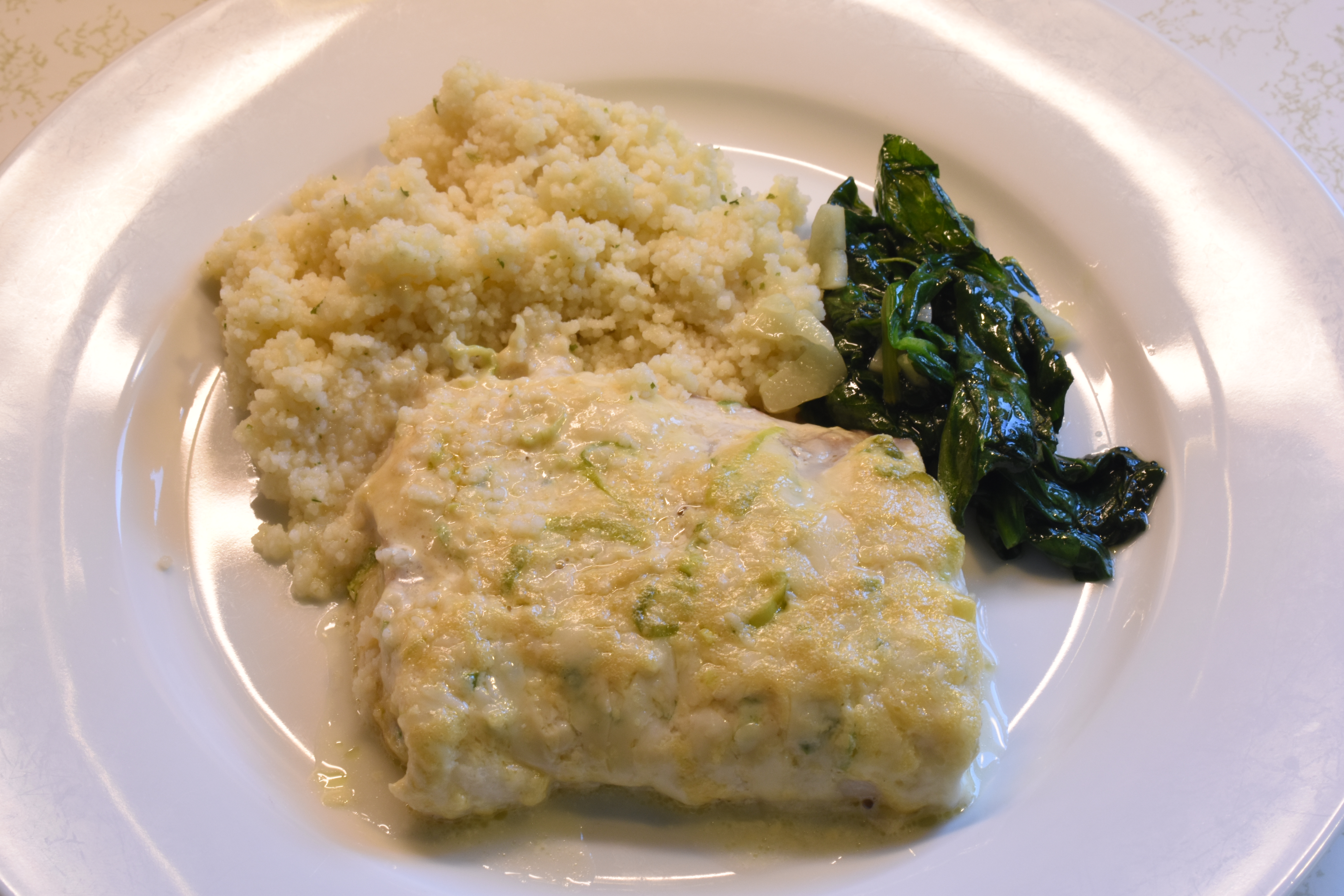
Oil small 8” square baking dish cook the fish.  Bake oven to 400°.  Baked fish 15/20 min.

I served this with garlic and olive oil couscous.

8/22/21

Maque Choux (Corn Vegetable Stew)

100_6878

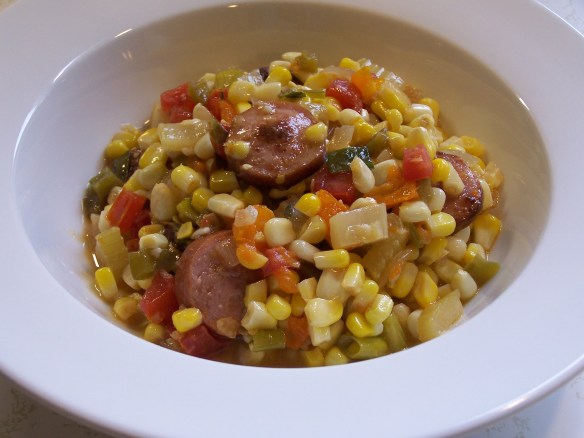
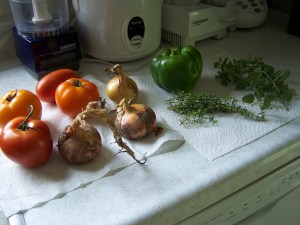
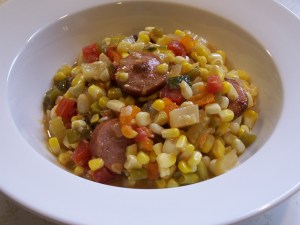
This is a purely Cajun dish. But, up here in the Midwest there is wonderful sweet corn. In fact, the best sweet corn I ever ate. In my garden there are enough veggies and fresh herbs around to make a fresh Maque Choux (corn vegetable stew). The corn came from a farmer nearby.

Most recipes call for a meatless Maque Choux. I add a little sausage for flavor. My mother used to make it that way. Other recipes I’ve seen use andouille sausage, bacon or tasso (Cajun ham). You can spice this up all you want.  I’m not a big cayenne pepper fan.

I want the browned meat b/c I will use the meat “fond” for added flavor. As you know a “fond” is a French term that means “base” from remaining bits of meat. But, there are many versions that do not include meat as it is served as a side dish. I will serve this as a main dish.

100_6871

100_6874

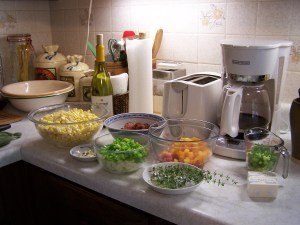
Ingredients:
10 oz. Turkey, Beef and Pork Kielbasa (Brown sausage in olive oil)
1 TBSP olive oil

6 uncooked fresh ears of corn – cut the corn using a sharp knife digging into the cob and getting the milk of the corn (There is no way you can do this without getting corn on the floor.)

Mirepoix Trinity (Used at first for the natural sugar and flavors)
½ cup quarter chopped celery stalks, I prefer the center stalk
1 cup or 1 medium onion, chopped
1 cup of green bell pepper, chopped

2 cups diced tomatoes – I used one Roma and one yellow
¾ cup scallions (green onions)
1 garlic clove minced

~3 to 5 TBSP unsalted butter
Thyme – fresh
Kosher salt (pinch)

Dash of white wine
½ cup of chicken stock

100_6876

Cooking Directions:
• Lightly brown the sausage in olive oil and remove
• Add the (Trinity) onion, celery, bell pepper and sauté four minutes. Add the dash of white wine to release the fond while sautéing and scraping the bottom of the pot
• Add the butter and melt
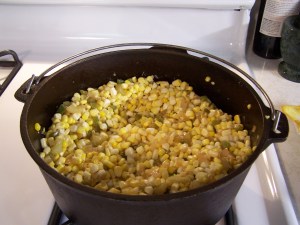
• On low heat add the corn and mix until the corn is buttered.
• Add thyme, return the meat, pinch of salt, ½ cup chicken stock and cook covered on medium heat 15 minutes
• Watch the pot, don’t let it over cook
• Add the remaining ingredients and cook another 15 minutes on medium to low heat. Add more chicken stock if necessary (There should only be just enough fluids to steam the corn and release the corn milk)

100_6878As of 8/21/21